Tag Archives: Strategic Vision

A Crash Crisis Communications Course For The NFL

The NFL continues to be battered in the court of public opinion. Last week it was the Ray Rice saga and the “what did NFL Commissioner Roger Goodell know and when did he know it questions.’ This week it is outrage over Minnesota Viking Adrian Peterson who is facing criminal charges for spanking his four-year old son with a wooden stick that left welts. In addition, it is still grappling with bullying in the locker room, players driving drunk and carrying weapons, a lawsuit from concussions, and a drug and steroids policy that some consider outdated.  Add to this Dallas Cowboys’ owner, Jerry Jones being sued for sexual harassment.  And let’s not forget it is addressing how it will deal with its first openly gay player, Michael Sam.

We know that consumers are outraged and advertisers are beginning to distance themselves slightly from the NFL. Radisson Hotels announced that the chain was suspending its sponsorship with the Vikings over the Peterson case. NFL sponsor, Anheuser-Busch announced its displeasure and concern with the NFL. When sponsors start suspending sponsorships and distance the company from the embattled brand, it means the public relations damage is not being contained but is actually growing.

The NFL’s crisis response has been sadly lacking in dealing with the escalating crisis. NFL Commissioner Roger Goodell has been largely invisible since he was interviewed last week on CBS and then allegations surfaced that the NFL knew earlier than had been admitted about the Ray Rice video that showed him punching his now wife Janay. The league announced that former FBI Director Robert Mueller was heading an investigation into the Rice controversy and had made some hires to deal with the issue and public policy. Yet in all of this there has been no public face for the NFL in over a week. All announcements have been made via press release.

So what should the NFL do now to calm the storm?

  1. If Goodell is compromised from talking during the ongoing Mueller investigation have someone else speak on behalf of the NFL, preferably a female officer. The public expects during a crisis, a brand or company to have a public face addressing the media and currently the NFL has none.
  2. Trump the number of senior level female officers within the NFL.       There are at least 17 in senior management in the NFL not even counting affiliated organizations.       Bringing this to the forefront will help dispel the idea that the NFL is anti-female.
  3. Ban Ray Rice from the NFL for life. His actions warrant it and will send a strong message of zero tolerance for domestic violence.
  4. Announce new stringent measures to deal with domestic violence and other issues the NFL is facing.
  5. Reassure sponsors that there are no other bombshells coming out. If there are, the NFL needs to get out in front and announce them before the media reports them, as well as how it is addressing the issues.
  6. Address policymakers and admit mistakes were made and outline what steps have been taken to correct them and ensure such things do not happen again.
  7. Apologize to fans for not upholding the standards and values fans expect of the NFL. This should be done through interviews and advertisements.
  8. Implement any recommendations the Mueller investigation recommends.
  9. Change the corporate culture within the NFL.
  10. Replace Roger Goodell with a new commissioner at the end of the season (unless the Mueller investigation proves that he knew of the Rice tape and lied, then terminate him at once) preferably with a high profile female with a clear mandate to clean up the NFL.

The NFL is facing a new public relations crisis weekly and the damage will continue until it takes some strong steps to address the issues directly. This crisis requires a fundamental change in how the NFL has been operating during the crisis. Sponsors and the public demand no less.



Book PR 101: Tips For Success

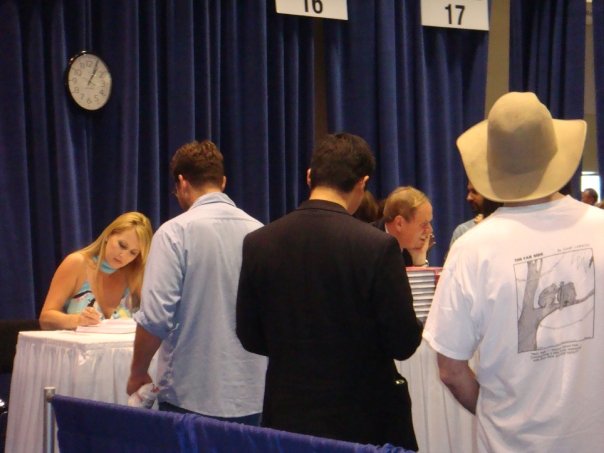
Jule_LA_BookExpo5

The book world is seeing an explosion in books coming out each year.  Self-publishing has changed the book world forever.  No longer do a few publishing houses control who gets published and who doesn’t.  More and more people are achieving their dream of being an author. Yet the challenge for authors to stand out is even greater.  There is a greater demand for book publicity than ever before.  Yet for many authors book publicity can be daunting and frightening.  They don’t fully understand it.  Here are some essentials that authors need to know about book publicity for it to work for them.

  1. Publicity does not equal sales.  One of the biggest things I hear when speaking to an author is how many books will I sell based upon an interview.  I tell them over and over again, there is no guarantee of sales.  In today’s world book publicity allows you to reach a target audience and stand out from other authors in your genre.  There is no guarantee that viewers, listeners, or readers will purchase your book based upon an interview or review but the chances of it happening increase.  Many authors have heard about the sales authors have received by appearing on Good Morning America, Ellen, and of course the now defunct Oprah.  Yet there is no guarantee that you will see the sales.  I had one author who did FOX & Friends, Good Morning America and appeared in the New York Times, Wall Street Journal, and USA Today at the same time and did not see a dramatic increase in sales.
  1. A publicity campaign takes time.  Authors spend months and even years in writing their book and pour their heart and soul into it.  A successful book publicity campaign doesn’t happen overnight.  It takes time and dedication.  Most successful authors spend between six months to a year in publicizing their book.  Sadly many authors think they can become a bestseller and get the publicity they need in a matter of days or weeks.  Remember it takes time.
  1. All media is important.  Everyone wants to be on the Today Show, Hannity, Ellen, or The View or in the New York Times, Redbook, or Vanity Fair.  Yet smaller shows or publications are just as important.  First a smaller show allows you to practice your interview skills before you are on national and hone your message.  Even more importantly you never know who might be listening.  I had a client once who had appeared on all the major networks and seen mediocre sales.  Yet he appeared on a small Miami station and sold over $40,000 worth of books because the Vice President of FedEx was listening. Every media opportunity is important.
  1. Remember who you are trying to reach.  Many authors when they are doing an interview forget that they are trying to reach the audience and instead try to make the interviewer like them.  They react as they see the interviewer reacting.  The interviewers interview hundreds of guests a year.  Chances are they will forget the author and the book the next day.  Authors need to remember they are targeting the listeners, the viewers, or the readers not the reporter.
  1. Incorporate your social media component with your publicity campaign.  Social media is important and essential to the success of any book publicity campaign.  Yet many authors fail to utilize it effectively.  They forget to post upcoming interviews or post the interviews after they happen.  They also fail to interact with their followers and sometimes have a message different from that they are doing in their interviews.  Or even worse they post the same thing on Twitter, blog, and Facebook.  People know when something is programmed rather than done by a human.  Always have the three different but conveying the same theme.
  1. Realize you need professional help.  Despite the popularity of self-published books, the industry still has a stigma with some of the media.  The worst thing an author can do is add to the stigma by trying to do their own campaign.  It comes off as amateurish.  Seek out a professional who understands book publicity and the components of a campaign from interviews to media kits to trade shows to speaking engagements.

Publicity is a daunting and challenging proposition for anyone.  For an author unfamiliar with it, publicity can be overwhelming.  To ease on confusion and to ensure success, an author needs to prepare for it like they did when writing their book

Should You Rebrand After A Crisis

Rebranding can appear like a solution for a company after a crisis. Yet there is no guarantee it will succeed. Simply changing a company’s name or logo doesn’t win back trust. Successful rebranding means changing the corporate culture of the company.

In the 1990s, ValuJet faced safety issues culminating in the crash of Flight 592 in the Florida Everglades. ValuJet equaled air disaster and cutting safety corners. Seeking to recover, ValuJet merged with the smaller Airways Corporation, parent of AirTran. The merged company used the name AirTran, even though ValuJet was the survivor of the merger because the ValuJet name was irreparable. The rebrand succeeded because the company’s message reflected a break in the past and emphasized safe cost-efficient air travel. Consumers believed the message and ValuJet faded from memory

Private security contractor, Blackwater was employed by the U.S. government in Iraq and Afghanistan faced a crisis for the methods it employed that led to the deaths of innocent civilians and refusal to cooperate with Congress. The company underwent two name changes. Yet the rebranding has failed because it did not communicate a new culture or shed its past.

Some say that Malaysia Airlines rebranding (after the tragedies of flights MH370 that has yet to be located and MH17 shot down over Ukraine) making Malaysia Airlines synonymous with disasters and a punchline for comedians. A new name won’t change that perception. Unless the airline overcomes the perception of incompetence and shows that it places safety first, rebranding will fail.

Rebranding is a first step after a disaster. By itself, a new name won’t fix things. Successful rebranding must communicate a fundamental change in the company and its operations taking time.


Crisis Communications For The NFL

The start of the NFL season has been overshadowed by the never-ending Ray Rice saga and the NFL’s public relations handling of the crisis or rather the lack of crisis management it has shown.  Associated Press reported that a law enforcement officer contacted the NFL and stated that the NFL had received the video of Ray Rice punching his then fiancée and now wife, Janay in April and someone at the NFL left a recorded message acknowledging the video.  This is a direct contradiction of what the NFL has repeatedly stated and NFL Commissioner Roger Goodell said during a televised interview.  The NFL is maintaining it knew nothing about the video until Monday but the public does not appear to believe it (although it is hard to believe that if Goodell had seen it back then he would have dealt so leniently with Rice nor fail to realize that it would  surface publicly at some point).  Nor do policymakers who are calling for hearings on how professional sports deals with domestic violence.

The NFL and Rice’s former team, the Baltimore Ravens had already faced a public relations firestorm over a video showing Rice dragging an unconscious Janay out of an elevator in February.  The NFL merely suspended him for two games and the Ravens took no disciplinary action.

Adding to the NFL’s PR woes is the fact that Goodell appeared to leave open the possibility that Rice (whose contract was terminated by the Baltimore Ravens and suspended by the NFL indefinitely) might be able to return to playing.  This is a sharp contrast with Major League Baseball banning legendary player/manager, Pete Rose from baseball for life for gambling and the NBA banning LA Clippers owner, Donald Sterling from basketball for life over racial remarks.

This at a time when the NFL brand is suffering from  scandals with bullying in the locker room, players driving drunk and carrying weapons, a lawsuit from concussions, and a drug and steroids policy that some consider outdated.  Add to this Dallas Cowboys’ owner, Jerry Jones being sued this week for sexual harassment.  And let’s not forget it is grappling on how to deal with the first openly gay player, Michael Sam.

The NFL brand is its luster with the Ray Rice.  What needs to be done in terms of a crisis communications strategy?

The NFL

  1. If Roger Goodell lied about when the NFL became aware of the Rice video, he must be removed as Commissioner at once along with anyone else who was aware of its existence. Goodell’s replacement under such a scenario must be someone above reproach in the public eye; empowered with a mandate to clean-up the sport like Major League Baseball Commissioner Kennesaw Mountain Landis did for baseball after the scandalous 1919 World Series
  2. Barring that revelation, Goodell, the public face of the NFL, needs to speak to the media, reiterate that the NFL had no knowledge of the tape, announce what steps are being taken to investigate the allegation (appointing former FBI Director Robert Mueller to head the NFL’s investigation was a good PR move), stress the NFL’s zero tolerance for domestic abuse, and apologize for failing to address and take stronger action when the Rice scandal first began, admitting the NFL made a mistake in how the situation was first addressed.
  3. Ban Rice from football for life. Failing to do so will only give credence to belief that once this scandal blows over, Rice will show up playing for another team.
  4. Announce a special committee that includes owners, players, domestic abuse specialists, and academics to review and strengthen NFL guidelines on dealing with domestic abuse and sexual abuse in the NFL.
  5. Require mandatory classes on domestic violence and sensitivity training for all players and NFL personnel.
  6. Begin a collaboration with organizations involved in dealing with domestic violence and victims of domestic violence, and contribute financially to such organizations, as well as making players available as media spokespersons.
  7. Respond to Congressional inquiries with all the facts that become available and avoid trying to evade responsibility.
  8. Begin an outreach for female fans.
  9. Highlight the NFL’s involvement in communities and other feel good stories that reflect the real NFL.
  10. Outline a vision for the NFL’s future.

The NFL owners

  1. Announce their confidence and support for Goodell. Anything else would be read by the media as a sign that they were preparing to let him go and also be unfair to the Commissioner (unless it is proven he lied).
  2. Announce steps they are taking within their teams to discourage player misconduct and punish it when it happens.
  3. Reach out to fans by thanking them for their support and lowering ticket prices to increase attendance and maintain fan loyalty.
  4. Announce team efforts’ beyond what the NFL is doing in confronting the various issues facing professional football.
  5. Begin planning for a post Goodell era after the season, allowing him a graceful exit. He must ultimately be replaced because he has lost the confidence of the public and policymakers who view him either as a liar or incompetent and uncaring; and he will not be able to fully recover.
  6. Replace Goodell with a high profile personality considered beyond reproach such as a Mitt Romney, Condoleezza Rice Rudy Giuliani or even Hillary Clinton.

Finally, the Baltimore Ravens, Rice’s former team have been overlooked in this PR crisis.  The team has been praised for terminating Rice’s contract.  But soon, scrutiny will return to the Ravens and how the team originally addressed the situation and if personnel knew of the second video.  Remember when the first video surfaced, the team took no disciplinary action at the time.  Indeed, Ravens head coach, John Harbaugh said of Rice at the time “he is one heck of a guy,” and the Ravens tweeted “Janay Rice says she deeply regrets the role that she played the night of the incident.”  Basically the team sided with the abuser over the victim.

The Ravens

  1. Announce an independent investigation to see if anyone with the team knew about these actions earlier or may have even helped cover up some of this story early on and that appropriate punishments will be meted out to any guilty parties.
  2. Work with domestic abuse advocates in Baltimore in creating greater awareness of domestic violence through an active community relations program.
  3. Make players available as spokespersons against domestic violence.
  4. Require mandatory sensitivity training and education on domestic violence for all team personnel.
  5. Run advertisements apologizing to fans for their failure to take earlier action against Rice and restate their commitment against domestic violence.
  6. Make significant contributions to domestic violence organizations.

The Ray Rice situation and the ongoing PR crisis for the NFL emphasizes the need for being proactive and having a crisis communications plan ready.  It is a case study not only for professional sports but businesses as well on how to deal with a crisis.

Ray Rice: NFL In Need Of Crisis Communications

Hoping to defuse a growing public relations crisis, the Baltimore Ravens announced that the team was terminating the contract of three-time all-Pro running back, Ray Rice and the NFL announced that it was suspending him indefinitely following the release of a video showing him punching his then fiancée, now wife, Janay in February.  While this is both the right thing to do and proper way to handle a public relations crisis of such magnitude, it won’t be enough for the NFL or the Ravens.

Why isn’t it enough?  Because during the summer when a hotel video surfaced showing Rice dragging Janay unconscious out of an elevator, both the NFL and Ravens basically failed to take any action at what was obviously domestic violence.  The NFL gave Rice a two game suspension (remember Pete Rose was banned for life from Major League Baseball for gambling and Donald Sterling was banned for life from the NBA for racist statements). 

And the Ravens?  The team took no disciplinary action at the time.  Indeed, Ravens head coach, John Harbaugh said of Rice at the time “he is one heck of a guy,” and the Ravens tweeted “Janay Rice says she deeply regrets the role that she played the night of the incident.”  Basically the team sided with the abuser over the victim.


All of this comes at a time when the NFL brand is suffering from  bullying in the locker room, players driving drunk and carrying weapons, a lawsuit over brain injuries from concussions in the game, and a drug and steroids policy that some consider outdated.  Even today’s actions may not be enough to convince some that the Ravens and the NFL understand domestic violence.

So what should they do from a public relations standpoint?

The NFL

  1. Ban Ray Rice from the game for life. This will send a strong and clear message that the NFL has zero tolerance for domestic violence.
  2. Require classes on domestic violence and sensitivity training for all players and NFL personnel.
  3. Work with organizations involved in dealing with domestic violence and victims of domestic violence, and contribute financially to such organizations.
  4. Have NFL players become spokespersons denouncing domestic violence.
  5. NFL Commissioner Roger Goodell should speak to the media, apologize for not taking a stronger stand earlier and meting out a stiffer punishment to Rice when the story first broke several months ago, and explain what steps the NFL has taken and will be taking.
  6. Work with owners in strict enforcement of the new NFL code of conduct.

The Ravens

  1. Apologize for not taking disciplinary action earlier with Rice.
  2. Announce a formal internal investigation to see if anyone knew about these actions earlier or may have even helped cover up some of this story early on.
  3. Work with domestic abuse advocates in Baltimore in creating greater awareness of domestic violence through an active community relations program.
  4. Make players available as spokespersons against domestic violence.
  5. Require mandatory sensitivity training and education on domestic violence.
  6. Run advertisements apologizing to fans for their failure to take earlier action against Rice and restate their commitment against domestic violence.
  7. Make significant contributions to domestic violence organizations.

 The Ray Rice story is deplorable.  It is without a shadow of a doubt a failure of leadership when the first story broke and a major public relations debacle for the Ravens and the NFL.  It is also an opportunity for both to repair their public image and brand identity if now handled correctly in their communications and actions.

CeeLo Green’s Twitter Firestorm: A Crisis Communications Plan

More and more we are seeing the power of social media.  A tweet can set off a thousand retweets and skyrocket a new company or brand off the charts.  It can also destroy and derail a career as the Grammy winning singer/rapper, CeeLo Green, best known as one of the original judges of NBC’s “The Voice” found out recently.

CeeLo had been accused of sexual battery in 2012 by a woman.  The Los Angeles Police Department investigated the allegations and after a yearlong investigation, the Los Angeles District Attorney’s Office determined there was insufficient evidence to prosecute him on the allegations.  However stemming from the investigation, CeeLo pleaded guilty to a felony charge of furnishing a controlled substance.  He received three years’ probation and community service.

That should have been the end of the story.  Yet it wasn’t and a Twitter-caused firestorm erupted when CeeLo tweeted several comments about his case, particularly on the subject of rape.

Among his tweets were: “People who have really been raped REMEMBER!!!”; “When someone brakes on a home there is broken glass where is your plausible proof that anyone was raped.”; and “If someone is passed out they’re not even WITH you consciously! so WITH Implies consent,”

There was immediate and justified outrage to his reprehensible tweets from fans and in both traditional and social media.  TBS that had aired his reality television show announced that they were cancelling “The Good Life”.  Green issued an apology and deleted his Twitter account.

Yet much damage has been done to his reputation.  Can he recover?  Perhaps.

From a crisis communications standpoint there several things that need to be done (and it must be done sincerely).

  1. Issue a new strong and forceful apology, taking full responsibility for his tweets, apologizing to everyone he offended, particularly rape victims, and acknowledging the enormity of rape and its impact.
  2. Sit down for a hard-hitting interview discussing what he did, why he tweeted what he did, apologizing sincerely, and discussing how this can be used as a learning experience.
  3. Step back and go silent.
  4. Take sensitivity training.
  5. Become involved without publicizing it with rape help organizations such as RAINN.
  6. After a period of six months or so emerge from a media blackout.
  7. Let others tell of how he has changed and helped spread the message.

Will this strategy entirely rehabilitate Ceelo’s image?  No but it will help him to survive if done sincerely.  This is also a cautionary tale of the power of social media that once you post something, it can never be entirely deleted and a social media firestorm will lead to a traditional media disaster.

How To Tips: Reaching The Media At Trade Shows

22170_1339296954829_1003307539_31037656_1901827_n


Trade shows like Toy Fair and BookExpo are great places to meet buyers and also gain public exposure through media coverage.  News stories that come out of a trade show can make a company’s entire year.  Many smaller sized or new companies put most of their public relations and marketing budget into a major trade show.  Media coverage from a trade show can make or break a company.  For a new company or product, it can put them on the road of success.  Lack of coverage can often mean the end of a start-up company that was banking on media coverage and spent all of their public relations and marketing budget on the tradeshow. 

Here are six tips for trade shows to help you be successful in getting media coverage to make it worthwhile:

  1. Don’t cheap out. You’ve already spent tens of thousands (or millions) on your exhibit. Spend a few extra bucks and bring a public relations professional. Your sales team is there to meet buyers, partners and to sell, not handle media walk-bys, demos, interviews, social media posts and press room activities.
  2. Stick to your schedule. Reporters hate it when you decide to cancel or reschedule an interview at the last minute. They’ve already booked other appointments and you’ll risk losing the story. Don’t throw a hand grenade into a schedule that your PR team has spent weeks finalizing. Having a PR pro on-site will solve the inevitable sales meeting or customer drop-by conflicts that pop up. 
  3. BYO. Don’t rely on the show’s registered media list; qualify and build your own. Show media lists are notoriously out of date and often incomplete because many Tier 1 media simply don’t pre-register. They decide to attend last-minute. Advance media calls, confirmations the week of the show and reconfirmations during the show will ensure you connect with the right reporters. 
  4. Help media cut through the clutter. We’ve landed major national news stories by offering producers and reporters the opportunity to walk the show floor with a client who really ‘gets’ the category and can offer sound data, insights and opinions on what’s hot – and what’s not. Most trade shows are overwhelming, and the 24/7 news cycle makes them even more unmanageable for skinnied up editorial staffs.
  5. Brand the press room. If you’re spending a small fortune on an exhibit, why neglect the place where most media gather even if they skip your booth? There are 1001 smart and not always costly ideas for establishing a branded presence in a press room – from supplying a masseur to massage tired feet to sponsoring coffee breaks, note pads or back packs.
  6. Stock the press room. Don’t count on media to find you. Even if it’s just a humble jump drive, make sure your latest product info is available in the press room. No matter how old-fashioned it sounds – media still congregate in ‘their’ area to talk, post stories and get re-caffeinated, and they will scout out available materials. Even if they missed you on the show floor, there’s a good chance you can get your message in front of them.

Remember just as you plan every detail of your booth at a trade show, so should you plan your media strategy for the show.  Indeed the media coverage may at times be more important than how the booth looked.

How To Marketing Tips For The U.S. Cultural Mosaic

The cultural mosaic of the United States has never been more intricate. Varied cultural groups — many in their second and third generation — continuously blending together, maintaining and discarding various aspects of their own heritage while adopting, adapting and integrating different aspects of the new one that surrounds them.

U.S. Hispanics are no exception. Take something as (seemingly) fundamental as language, for example: according to a 2012 Nielsen report, only 56% of U.S. Hispanic adults speak only or mostly Spanish, while a full 40% speak only or mostly English. Four out of every ten Hispanics in the United States now speak more English than they do Spanish!

 However, this doesn’t mean that Hispanics are losing their culture in the wake of Anglo-American assimilation. Quite the contrary: the Latino culture is a vibrant, emotional, meaningful culture that continues to grow and thrive. But it does shed light on one of the most important lessons for today’s marketers and brand managers: when marketing to U.S. Hispanics, culturally-relevant content is primary, and language is secondary.

 Director Robert Rodriguez (Once Upon A Time In Mexico, Spy Kids, Sin City) understands this shift and its implications, announcing in February his plans to launch El Rey, a television network which will contain original Latino programming — entirely in English.

 “I have five kids of my own,” he said, adding that while they’re bilingual, they converse mostly in English. “They want to feel integrated into the mass community, but [still] have something they can point to that really reflects their identity.”

 Rodriguez isn’t the only one picking up on this linguistic shift. Cosmopolitan for Latinas is taking aim at bicultural readers, recognizing that even though Hispanics want content that resonates with them on a cultural level, they read, speak and work primarily in English. Blogs like Mamas Latinas and TV channels like NBC Latino are following suit.

Recently launched network MundoFox, on the other hand, is doing the reverse: seeking to emulate American programming “in every way except the language in which it is delivered … That means television that feels, looks, sounds like American shows, but just happens to be created in Spanish.” So instead of creating traditionally Hispanic programming in English, MundoFox wants to create traditionally American programming in Spanish.


Although MundoFox might target a different subset of Hispanic consumers than El Rey, and the two approaches may seem to contradict, both apply the exact same principle: when marketing to U.S. Hispanics, culturally-relevant content is primary, and language is secondary. It’s no longer a given that marketing must take place in Spanish. Consider the content first.

The same goes for any company, product or brand looking to tap into the Hispanic market. The content of your messaging should be strong enough to transcend the language in which it is presented. Make sure you understand who you’re talking to and what resonates with them before jumping to any conclusions about their preferences. The answer — and the language — may surprise you.

PR For Effective Audience Targeting

MINOLTA DIGITAL CAMERA

In public relations, one of the first lessons we learn is that to deliver real results for our clients (and their bottom lines), we need to take ourselves out of the equation. The second lesson is how to convince our clients they have to do the same thing. Why? Because in most cases, neither we nor our client contacts are representative of the audience they need to reach.

It’s a challenging proposition. Business owners are rightfully very passionate about their companies. Having employees who are passionate about what they do and the organization for which they work is one of the greatest strengths they can have. But these same qualities can create a harmful environment when it comes to creating compelling communications and seeing a return from a public relations campaign.  The bottom line is that to be effective we must forget our preferences and think about those we are trying to reach.

 The good news is that effective communicators always keep the target audience at the top of their mind when crafting their work. Here are questions I always ask myself when evaluating whether a pitch, press release, or even a tweet is hitting its mark: 

  1. Who is the target audience?Yes, this seems obvious, but you can’t ask yourself this question enough. As busy as we are and as entrenched as we can get in getting the work done, stepping back from it and reminding ourselves of the real audience we need to reach has to be the first step each and every time. 
  2. Am I talking in language they will easily understand? I don’t mean English, Spanish or Russian. Rather, is there lingo or trade terminology that is more “inside baseball” that only industry insiders will understand rather than it is clear and compelling? There are no extra points for grammatically-complex sentences filled with technical jargon – unless your audience is well-versed in the intricacies of what you do and how you do it. For most businesses and organizations, those details are not germane to the desired action and may in fact cause your audience to tune out. Short, clear, crisp – and commonly-used – language is almost always the best option.  Wordy and technical responses turn off the audience most times and they switch to something else.  Nothing loses an audience than talking in terms they do not understand
  3. Are my personal preferences getting in the way? This is a tough one. As a customer yourself, you want to really like what you’re paying for. That’s understandable. But if you really like green, and you know from research that your audience simply loves orange, then orange is the way to go. The message must appeal to your audience first. You’ll learn to love orange…when it’s helping meet your business goals.
  4. What’s in it for them? People are busy. They are also inundated with marketing messages everywhere they turn. The only way to get their attention is to deliver a message that caters to their needs.

The bottom line is this: effective communications are those that work. To drive sales, change behavior or diffuse a crisis, messages must first reach their target. When we remember to take ourselves out of the equation – and see things from the perspective of our audience – we stand a greater chance of success.

Where Self-Published Authors Should Invest Money


Jule_LA_BookExpo

More and more authors are turning to self-publishing.  In 2013, Bowker reported over 391,000 books were self-published.  That was up 59% from 2011.  This trend is expected to continue. 

With the increase in self-publishing, many authors wonder where they should invest their resources when undertaking this endeavor.  They know the cost of self-publishing can be astronomical.  I recommend that any author who is self-published spend their money on:

  1. Editorial
  2. Cover design
  3. Marketing and publicity

A good cover will catch a reader’s attention.  People are visual.  They react to what they see.  When competing against thousands of book in your genre, a good cover is essential to grab the consumer’s attention and get them to pick up the book and look at it.  Getting a consumer to look at your book is half the battle in selling the book.  This means a striking cover design that will arouse the reader’s interest.  A good cover conveys a sense of what the book is about and lends a sense of intrigue as well.  You don’t want to use clip art.  You want a graphic artist who has expertise in designing cover art and understands what your book is about.  A good graphic artist will provide you with several samples to select from after going to work on your cover.  Sometimes the perfect cover may be a combination of all the samples.  No matter what, work with a professional who has worked with authors before and can show you samples of his or her work.

Once a reader’s attention has been spiked, they will skim through the book to determine interest.  A book with spelling errors or grammatical errors will turn off the consumer and probably cost the sale.  Beyond that, you are struggling with the mindset (an unfair one) but one that still exists that self-published books are subpar.  A badly edited book will reinforce that mindset and hurt your sales.  Reviewers will pounce on any grammatical mistakes in the book.  Spending money on a good editor prevents that from happening.

So you have written the world’s best book, yet if you don’t publicize it, no one will know that it exists.  Getting the word out about your book is a lengthy process, sometimes as long or if not longer than writing the book.  It means book reviews, interviews, websites, collateral material, press releases, social media, speaking engagements, book trailers, blog tours, and book signings.  An average marketing and publicity campaign for an author takes between six to sixteen months.  It encompasses developing an author brand and reaching readers.  Don’t forget your competing not just against other self-published authors but also authors published through traditional publishing houses.  The challenge to get your book to stand out is immense.  That is why investing in a strong marketing and public relations plan either with an agency or individual who has worked with self-published authors in the past is essential.

Writing a book and taking it to market is a fulltime endeavor.  Making is successful can even be more challenging.  That is why know where to make your investments as an author is critical.